Tuesday, May 11, 2010

Tobacco Laws And Their Implementation – The Horror of Reality

[To see CNS photo gallery of this event, click here]

It was an eye opener for the team members to see the apathy of citizens and lackadaisical attitude of implementing authorities, for tackling this serious issue. They had their own suggestions to offer. One girl suggested that tobacco growers switch over to Jatropa plantation. This would serve a dual purpose – tobacco growers will have an alternate and economically viable crop to grow and the ominous shifting of land, currently being used to grow food crops, towards Jatropa cultivation will be controlled. At the same time we will have enough base material for bio fuels. Another girl felt that children can use their blackmail tactics upon their elders to force them to quit smoking and eating tobacco. Read more


Tobacco Laws And Their Implementation
The Horror of Reality
[To see CNS photo gallery of this event, click here]

Are the tobacco control laws, as envisaged in the COTPA (Cigarettes and Other Tobacco Products Act 2003) and the Ban on Smoking in Public Places being enforced and followed in the city of Lucknow? And are the citizens any wiser about the hazards of smoking and tobacco consumption?

To find the ground reality, some students of Class XII of Loreto Convent College, recently did a random survey of the city of Lucknow, as part of their Environmental Education Project. They surveyed 200 persons (150 males and 50 females) of various age groups, and coming from different strata of society- -from rickshaw pullers to executives.

They traversed the entire city clicking photographs of shops/kiosks selling cigarettes and other tobacco products much within 100metres range of educational institutions. They searched in vain, for signage in schools/colleges proclaiming that smoking is prohibited in the premises. They examined the tobacco/gutkha pouches for the information printed on them, and even posed as customers and easily bought cigarette and tobacco packs, despite being less than 18 years of age.

Some of the results of this survey were startling indeed.
Although a large majority of the respondents (98.5%) had heard anti tobacco messages on television/radio, yet more than 70% of the males and 50% females were found to be users of tobacco products.

Maximum consumption was in the age group of 19-23 years (21%) and minimum in the group 49-53 years (6%).

The following points emerging from this study indicate the violation of one or more of some of the provisions of COTPA 2003.

Ban On Smoking In Public Places: 41% of the respondents confessed to have smoked in public places, but surprisingly 94% of the offenders were neither checked nor fined for this violation. More that 29% respondents said that there was no ban on smoking at their workplace.

Ban On Sale Of Tobacco Products To (and By) Minors: Out of all the minors surveyed (males and females), 81% of the males and 33% of the females were tobacco users. 76% of the people felt that it was very easy for minors to buy tobacco. In fact, more than 51% of the respondents had bought tobacco products from minors, at some time or the other.

Tobacco Products Cannot Be Sold Within A Radius Of 100yards Of Educational Institutions:
78% of the people said that they had seen tobacco shops within 100 yards radius of schools and colleges. In fact, out 36 schools/colleges which the students personally visited, 30 had one or more shops selling cigarettes and tobacco products, in some cases right next to their entry gates.

Ban On Direct And Indirect Advertising Of Tobacco Products: Out of the 20 gutkha packets of different brands studied by the students, 7 were known to be regularly advertised on television, radio, cinema halls. These were Pan Parag, Manikchand, Rajnigandha, Kamla Pasand, Rajshree and Tulsi.
But the implementation of the law seems to be stricter in case of cigarettes with none of the brands being advertised through any communication medium.

English And One Or More Indian Languages To Be Used For Health Warnings On Tobacco Packs: Only 13 out of the 20 gutkha packets had warnings in Hindi and English, with 5 of them also mentioning ‘Not for sale to minors’. The brand ‘Aadar’ has mentioned the warning in Hindi on some packs and in English on others, in contravention of the law.

Ingredients Should Be Declared On Tobacco Product Packs: Only 12 gutkha brands had mentioned some ingredients (the safe ones). The nicotine and tar content was not mentioned on any pack.

It was an eye opener for the team members to see the apathy of citizens and lackadaisical attitude of implementing authorities, for tackling this serious issue. They had their own suggestions to offer. One girl suggested that tobacco growers switch over to Jatropa plantation. This would serve a dual purpose – tobacco growers will have an alternate and economically viable crop to grow and the ominous shifting of land, currently being used to grow food crops, towards Jatropa cultivation will be controlled. At the same time we will have enough base material for bio fuels. Another girl felt that children can use their blackmail tactics upon their elders to force them to quit smoking and eating tobacco.

The students have documented the information collected in the form of survey sheet questionnaires, photographs and real specimen of cigarette and tobacco packets.

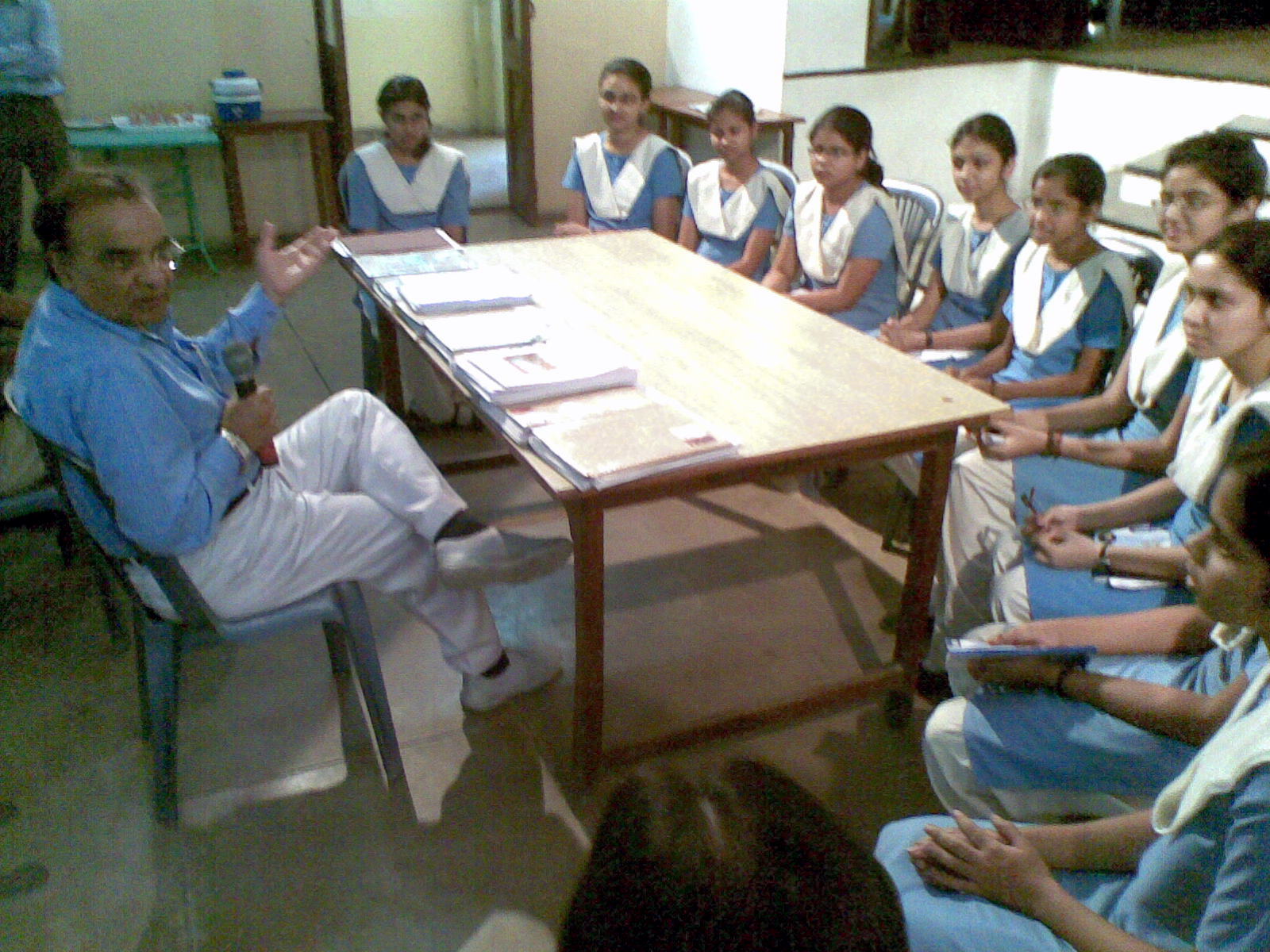
They shared their findings with the media, at a Press Conference organized in the premises of Loreto Convent College, Lucknow, and aired their views candidly.

On this occasion, Professor (Dr) Rama Kant, Head of the Surgery Department, Chhatrapati Shahuji Maharaj Medical University (CSMMU) - erstwhile King George's Medical College (KGMC), and a well known anti-tobacco crusader, had a very interactive session with the students. He commended them for this one of its kind study, and impressed upon the importance of girls being involved in the campaign against tobacco, as tobacco companies are now targeting children and women to become their potential customers. As more and more men succumb to the fatal effects of cigarettes and chewing tobacco, these companies want to woo youngsters, especially females, to have a steady supply of customers for many years to come. Their attempts have to be thwarted at all costs. This all the more important, as the health ill effects of tobacco/cigarettes manifest themselves after a prolonged time. So the user feels quite comfortable ‘for the time being’. For those addicted to tobacco/smoking, de addiction centres offer good services. But these have to be supplemented with good counselling of the patient and his/her family.

The sincere and honest efforts of the students in executing this project are commendable indeed. The survey has helped them get a deeper insight of the menace of tobacco and made them more sensitive about the need to eradicate this scourge from society. They have just touched the tip of the iceberg. Their sincere efforts need to be replicated, so that a mass ‘anti tobacco’ awareness movement is started amongst the other school/college students of the city.

Shobha Shukla
(The author is the Editor of Citizen News Service(CNS), Director of CNS Diabetes Media Initiative, has worked earlier with State Planning Institute, UP, and teaches Physics at India's prestigious Loreto Convent. Email: shobha@citizen-news.org, website: www.citizen-news.org)

Published in:
Thai-Indian News, Bangkok, Thailand
Citizen News Service (CNS), India/Thailand
Bihar and Jharkhand News Service (BJNS)
Elites TV News, USA
Connect.in.com
Allvoices.com
Digg.com
Tobacco Industry Today

Monday, May 10, 2010

Weak implementation of tobacco control laws in Lucknow: Loreto College Students

[To see CNS photo gallery of this event, click here]
Are the tobacco control laws, as envisaged in the COTPA (Cigarettes and Other Tobacco Products Act 2003), like the Ban on Smoking in Public Places, being enforced and followed in the city of Lucknow? Are the Lucknow-citizens any wiser about the hazards of smoking and tobacco consumption? To find the ground reality, some students of Class XII of Loreto Convent College, Lucknow, recently did a random survey of the city, as part of their Environmental Education Project. They surveyed 200 persons (150 males and 50 females) of various age groups, and coming from different strata of society - from rickshaw pullers to executives. Read more


They traversed the entire city clicking photographs of shops/ kiosks selling cigarettes and other tobacco products much within 100 metres range of educational institutions.  They searched in vain, for signage in schools/colleges proclaiming that smoking is prohibited in the premises. They examined the tobacco/ gutkha pouches for the information printed on them, and even posed as customers and easily bought cigarette and tobacco packs, despite being less than 18 years of age.

Some of the results of this survey were startling indeed.

Although a large majority of the respondents (98.5%) had heard anti tobacco messages on television/radio, yet more than 70% of the males and 50% females were found to be users of tobacco products.

Maximum consumption of tobacco products was in the age group of 19-23 years (21%).

The following points emerging from this study indicate the violation of one or more of some of the provisions of COTPA 2003:-

Ban on Smoking In Public Places: 41% of the respondents confessed to have smoked in public places, but surprisingly 94% of the offenders were neither checked nor fined for this violation. More that 29% respondents said that there was no ban on smoking at their workplace.

Ban on Sale of Tobacco Products To (and By) Minors: Out of all the minors surveyed (males and females), 81% of the males and 33% of the females were tobacco users. 76% of the people felt that it was very easy for minors to buy tobacco. In fact, more than 51% of the respondents had bought tobacco products from minors, at some time or the other.

Tobacco Products Cannot Be Sold Within A Radius Of 100 yards Of Educational Institutions:
78% of the people said that they had seen tobacco shops within 100 yards radius of schools and colleges. In fact, out 36 schools/colleges which the students personally visited, 30 had one or more shops selling cigarettes and tobacco products, in some cases right next to their entry gates.

Ban On Direct And Indirect Advertising Of Tobacco Products: Out of the 20 gutkha packets of different brands studied by the students, 7 were known to be regularly advertised on television, radio, cinema halls. But the implementation of the law seems to be stricter in case of cigarettes with none of the brands being advertised through any communication medium.

Warnings To Be Displayed In Two Languages –One In Which The Brand Name Appears And One In Any Other Language Used On The Pack: Only 13 out of the 20 gutkha packets had warnings in Hindi and English, with 5 of them also mentioning ‘Not for sale to minors’. Two brands had the warnings printed in English only, while one mentioned it in Hindi only. One brand mentions the warning in Hindi on some packs and in English on others. Three brands carried no health warnings at all.

Ingredients Should Be Declared On Tobacco Product Packs: Only 12 gutkha brands had mentioned some, relatively safe ingredients on their packs. But the nicotine and tar content was not mentioned on any pack.

The dedication and determination of the students in executing this project is commendable indeed. The survey has helped them get a deeper insight into the menace of tobacco and made them more sensitive about the need to eradicate the scourge of smoking cigarettes and chewing tobacco from our society. Their sincere efforts need to be replicated, so that a mass ‘anti tobacco’ awareness movement is started amongst school/college students of the city.

Well done Vatsala, Karishma, Ishita, Subhanshi, Vani, Anam, Tania, Ameena, Deepanshi and Swati (Class XII, Loreto Convent College, Lucknow).

Shobha Shukla
(The author is the Editor of Citizen News Service(CNS), Director of CNS Diabetes Media Initiative, has worked earlier with State Planning Institute, UP, and teaches Physics at India's prestigious Loreto Convent. Email: shobha@citizen-news.org, website: www.citizen-news.org)

Sunday, May 9, 2010

Governments in South-East Asia detain thousands in abusive drug detention centres

A new report "Detention as Treatment: Detention of Methamphetamine Users in Cambodia, Laos, and Thailand" released last week documents the arbitrary detention of thousands of drug users, mostly young people, in controversial detention centers in Cambodia, Laos, and Thailand. While the detention is supposedly for treatment, children and adults are held in boot camp-like centers where they do not receive adequate medical care and are subjected to routine physical and sexual abuse. Read more


The report, released by the Nossal Institute for Global Health and the Open Society Institute, examines practices in Laos, Cambodia, and Thailand, which today have eight, 14, and 84 detention centers, respectively. The number of these centers has more than tripled in the past decade.

Throughout the region, compulsory detention is a common response to the growth of methamphetamine use, which has been increasingly reported in Southeast Asia over the past decade. From 2001 to 2008, Laos received more than one million dollars from the United States, Japan, and other countries to build centers to detain and "treat" methamphetamine users.

"Government policies recognize that drug addiction is a public health problem, but most people are never seen by a health professional before being locked away in these centers where they are often abused by military and police under the guise of drug treatment," said Dr. Nick Thomson, author of the report. "The governments of Thailand, Cambodia, and Laos should immediately make plans to close these centers, as they are harmful to public health and human rights."

Unlike prisoners, most drug users interned in these facilities never appear before a judge and have no right of appeal. Once inside centers-where they may be detained for as long as five years-individuals have no access to medicines, or in some cases, even to adequate food.

Virtually 100 percent of those interned in detention centers return to drug use when they get out.

Rather than helping people improve their health, conditions in the detention centers are frequently harmful to individual and public health. Detainees are at greater risk of contracting infectious diseases, including HIV, TB, and hepatitis.

The report's authors interviewed government and nongovernmental officials and 30 former detainees who confirmed widespread abuse in the centers.

"The supervisors-people that have been in the center as residents a long time-control the sleeping room and often force the younger boys to have sex with them. I saw the supervisors rape boys between the ages of 10 and 14," said a 24-year-old male recently released from the Somsagna Drug Rehabilitation Center in Laos.

"I saw three staff beat a guy unconscious; they then dragged him away to another room," said one former detainee, a 19-year-old male in Cambodia.

Throughout the region, these centers are operated by military personnel or police officers. Most centers do not have any health professionals on staff. The individuals detained in these centers are not given health screenings prior to entering or upon leaving the centers, despite the fact that drug users and prisoners often have very serious health concerns.

"We see the doctor about once every couple of weeks and the nurse sometimes one morning a month, and otherwise there is no health staff anywhere," said an official with a police-run treatment center in Udon Thani, Thailand.

"Drug treatment consisted of a daily boot-camp regimen. There was no education about drugs," said a 22-year-old former detainee from Cambodia.

The report calls on the United Nations and donor countries like the United States to immediately cease any financial support for maintaining or building new detention centers. It further calls on the governments of Cambodia, Laos, and Thailand to release those currently detained, and devise strategies to permanently close drug detention centers.

Published in:
Elites TV News, USA
Citizen News Service (CNS), India/Thailand
News Trust News, New Delhi, Delhi
Wikio.com, UK
Celebrifi.com
Cigaronline.com

Friday, May 7, 2010

Deconstruct stereotypes: Let men and women be good human beings

Give me a handful of energetic youth and I will transform India, had said Vivekanand, who recognised the potential of youth power and had said this long back. Today, from government to voluntary sector, everyone is talking about youth to tackle a plethora of problems by involving them. When bringing the change is mentioned, women automatically get referred to along with youth as both are considered to be the crusaders in changing the world into a better place. Read more


United Nations also understood the power of youth and thereby involving boys and men in stopping violence against women. The issue has got top priority of the UN agenda. Taking the issue forward UN Solution Exchange Gender Community organised a maiden meeting of northern region of the country.

The activists both men and women from six states of India gathered at Lucknow to throw light on the power of youth and women and the potential involvement of both in checking violence against women.

Explaining the issue of men and women former Vice Chancellor of Lucknow University Professor Roop Rekha Verma from Saajhi Dunia said it is not a tug of war between man and woman but it is a tussle between two segments of people, one which dreams of equality in all spheres of life and the other, which finds inequality as the divine rule. The day both start sharing their dreams, there would be no tussle between two genders rather there would be a harmonious world around us. The discussion started with what is masculinity? Is it the way men dress or behave or is it much more beyond and much deeper than this?

"Violence and power are two words which are generally being associated with masculinity," pointed out Rahul Roy, the advisory committee member of gender community of UN Solution Exchange. Rahul was the first one to stand up when the concept of involving men in checking violence was initiated a couple of years back. Today addressing a gathering dominated by men, Rahul said the men lag behind in exploring within themselves, which women do get time to do and that is the reason women have come so far. The time has come when men too should look into their relations, do some introspection to improve their lives qualitatively, said Rahul.

The problem is that men do not bring themselves under the purview of gender but they relate gender only to women, Rahul explained. Men primarily need to work with themselves before they start working with other men. The society constructs masculinity and femininity in boys and girls since their very childhood and with this construction, gender-specific behaviour is imbibed in boys and girls, said Professor Roop Rekha Varma. She said the need of the hour is to deconstruct the stereotype and start constructing human beings. "Muscle power has lost its meaning in the nuclear era, therefore no more respect to male ego but due respect to self respect of man and woman both," she indicated.

When the issue of respect came, Satish Singh from Men's Action for Stopping Violence Against Women (MASVAW), who is working with men to stop violence against women, clarified, "respect the difference between man and woman but do not discriminate between them at any level."

However, there was a general query from the men participants as to where is the support mechanism for those men who acknowledge the fact and want to change the way they had been constructed in their childhood.

Lalit Kumar, Secretary, National Foundation for Communal Harmony, which is an autonomous body of government of India, was also present at the event. He said the event is talking about women and youth, which constitutes 75 percent of total population.

Raymond Brands from Partners for Prevention from Bangkok stressed on importance of establishing links between policy makers and local realities, besides the need for networking among the partners working on similar issues.

Alka Pande
(The author is a senior journalist based in Lucknow, India)

Published in:
Citizen News Service (CNS), India/Thailand
Asian Tribune, Sri Lanka
Elites TV News, USA
News Trust News, New Delhi, Delhi
Thai-Indian News, Bangkok, Thailand
Bihar and Jharkhand News Service (BJNS)
Vivalanka, Srilanka
Banderas News, Mexico
Friendfeed.com
Allvoices.com
Twitter.com
Newpostonline.com
Connect.in.com
Silobreaker.com
News India Mart

Victory for access to medicines as Valaganciclovir patent is overturned

International medical humanitarian organisation Médecins Sans Frontières (MSF) welcomes the decision by the Indian Patent Office to set aside the product patent it had previously granted to pharmaceutical company Roche for the drug valganciclovir. Valganciclovir is primarily used as treatment and prevention of an infection caused by cytomegalovirus (CMV) in organ transplant patients, a highly lucrative market which Roche has sought to defend by patenting the medicine. But CMV also affects people living with HIV, and if left untreated, can cause blindness and death. Read more


"Roche was attempting to patent a new form of a drug that was really invented in the 1980s," said Leena Menghaney, Project Manager of the MSF Campaign for Access to Essential Medicines in India. "This decision shows that Section 3(d) of India’s Patents Act, which prevents companies from obtaining unjustified patents, is working. Equally importantly, the Patent Office also found separately that the patent claims were obvious and therefore not patentable."

Through this decision, the Indian Patent Office has also confirmed the right of patients groups to oppose a patent after it has been granted, a matter on which Roche claimed there was ambiguity. This follows a similar recognition in 2002 in Thailand of patients as 'persons interested' in the outcome of a patent application.

"For people living with HIV/AIDS in developing countries, accessing valganciclovir at Roche prices was difficult," said Loon Gangte of the Delhi Network of Positive People (DNP+), one of the patient groups that filed an opposition to the patent. "The decision will provide much needed relief as it secures the way for generic competition, which is the most effective and sustainable way of bringing drug prices down."

To date, the price of valganciclovir is prohibitively expensive – Roche markets the drugs for up to US$8,500 for a four-month treatment course in high-income countries. In India, the Roche price for a standard protocol is approximately $5,950. In December 2006, MSF approached Roche for a
discount, but even the 'discounted' price was so high that some MSF AIDS projects opted out of providing this treatment for CMV.

"This is one victory for access to medicines, but we have to be careful not to lose an even bigger fight," said Leena Menghaney. "India is currently negotiating a free trade agreement with the EU. If the country agrees to introduce stricter intellectual property provisions such as data exclusivity as a part of these talks, this would allow companies to create new monopolies on medicines – even where patents have been rejected as in the present case."

MSF will continue to follow this issue closely should Roche decide to appeal.

Background
In June 2007, Roche was granted a patent for valganciclovir in India, but the Chennai Patent Office (one of four offices that make up the Indian Patent Office) took this decision without hearing the arguments of public interest groups, including the Indian Network for People Living with HIV/AIDS (INP+) and the Tamil Nadu Networking People with HIV/AIDS (TNNP+), that opposed the granting of the patent.


In December 2008, the Madras High Court in Chennai therefore decided to set aside Roche's patent until these arguments could be heard. The Chennai Patent Office, during the course of this hearing, refused to hear all the arguments made by the oppositionists and rejected the pre-grant opposition, after which the public interest groups approached India's Supreme Court.


The Supreme Court directed the groups to join the post-grant opposition proceedings that were already taking place through oppositions filed by generic companies and the Delhi Network of Positive People (DNP+). At this stage Roche challenged the legal standing of DNP+ to oppose the patent after it had been granted, claiming an ambiguity in India's patent law.


Having heard the arguments of all the public interest groups and the generic companies, the Indian Patent Office has now determined that Roche's claims for a product patent on valganciclovir were invalid and recognised only the validity of one of the process claims made by Roche. It has also held that patients groups can file post-grant oppositions.

Thursday, May 6, 2010

Too little attention given to AIDS Orphans and vulnerable children

World AIDS Orphans Day: May 7
More than 15 million children worldwide have lost one or both parents to AIDS – equivalent to the number of people living in New York, Paris and Rome combined. In sub-Saharan Africa alone, 12 million children have been orphaned by the pandemic. Experts believe that millions more orphans remain unaccounted for in India, China and Russia. By 2010, the number of AIDS orphans worldwide is expected to climb to an estimated 20 - 25 million children. Read more


Behind these statistics are millions of stories of human suffering. In addition to the psychological trauma of losing a parent, orphans are often subject to discrimination and are less likely to receive healthcare, education and other needed services. The situation is yet more desperate for those living on the streets or in child-headed households. Deprived of protection, education, support and love, they face malnutrition, illness and HIV infection and are easy prey to many forms of exploitation: forced labor, prostitution and child soldiering. These children, and the world they inherit, face a future of unprecedented tragedy.

The AIDS orphans crisis has a catastrophic impact on households and communities – deepening poverty and exacerbating hardship. The extended family remains the only safety net for most affected children. Households are usually overwhelmed and are often unable to meet children’s most basic needs.

FEW RESOURCES REACH ORPHANS AND VULNERABLE CHILDREN
Too little attention is given to orphans and vulnerable children. Few resources are reaching the families and communities that provide the front-line response. We must bring the needs of these children to the forefront of our battle against HIV and AIDS. Specifically, governments should direct at least 10% of their overall HIV and AIDS funding to support AIDS orphans and vulnerable children.

PROVIDING SUPPORT TO ORPHANS IS COST EFFECTIVE AND SIMPLE
With adequate funding, the world can help children orphaned by AIDS to grow up healthy and safe.

We can address the challenges presented by the AIDS orphans crisis through:
- Support to families and communities that serve as the safety net for AIDS orphans.
- Access to education, health & nutrition for orphans and children affected by AIDS.
- Job training and livelihood support to give young people the skills necessary to enter the workforce and to become productive members of their community.
- Social protection laws that promote and enforce inheritance and other legal rights for orphans must be in place.
- Treatment for HIV positive children that is provided with special consideration for the physical, psychological, and social needs of a child living with HIV. 

More information online here

Involve men to check violence against women

The need to involve men to check violence against women has recently emerged as a strong tool for effective handling of the issue. Understanding the need and to share their views and experiences on the issue, activists from six North Indian states will gather at Lucknow – the capital of the most populous state of Uttar Pradesh - on May 7 and 8. Read more


The occasion is the first-ever northern states regional meet of the Gender Community of United Nations sponsored Solution Exchange – a online platform for e-discussions. The event will have deliberations, discussions, presentations and experience sharing on the topic of “Involving men as Partners in prevention of gender-based violence’’.

Social Activist and Actor, Rahul Bose, who is a Resource Group and Advisory Team Member of Solution Exchange for Gender Community is likely to be present on the occasion.

 "The event will also witness a fruitful partnership among the civil society organisations members as well as UN Volunteers – many of them would meet each other for the first time, though they had been participating in the e-discussions on the Gender Community on UN Solution Exchange site on a variety of topic related to gender," said Malika Basu, the UN Volunteer and the event convenor.

The meeting is being held to commemorate the ‘International Year of the Youth - 2010’ and will be supported by Partners for Prevention, UNIFEM, UNICEF, National Foundation for Communal Harmony (NFCH), OXFAM India - Lucknow, Find Your Feet, Sahbhagi Shiksha Kendra, and CASA. The activities of the Regional Meet will also discuss ‘Involving Youth in Communal Harmony’.

"The two chosen themes are highly pertinent for the six northern states, which would represent their cases and knowledge on the issue during the meet," said Augustine Valiath, the communication specialist at UNICEF Lucknow office. According to him, the aim of "Promoting Partnerships" is to promote sharing among development practitioners of the region, so that they learn from each other, share and collaborate and thereby advocate ‘zero tolerance’ for violence in any form – be it gender based violence or communal violence. Augustine said both types of violence affect girls and women disproportionately. It will facilitate practitioners work towards changing the practices and attitudes that provoke, perpetrate and pardon violence (of any kind).

The two-day event will bring together Solution Exchange Gender Community members as well as others representing Government, NGOs, academic institutions and development organisations from six Northern States viz. Haryana, Himachal Pradesh, Jammu & Kashmir, Punjab, Uttarakhand and Uttar Pradesh.

During the Meet, Many organisations will put up their stalls to display their organisational work on the themes chosen for the event. There will be two panel discussions on the two themes, which will focus on innovative initiatives; challenges in success of initiatives; determining proactive steps to meet the challenges and suggesting follow-up actions on priority basis. At the end of the discussion, the panel will come up with specific guidelines or recommendations with inputs from participants.

The event will end on 08 May evening with United Nations Volunteers, leading a mega event involving all participants to bring out a symbolic message on "promoting partnerships."

Alka Pande
(The author is a senior journalist based in Lucknow, India)